What does it take to make cities greener, more climate-resilient and liveable? And how can research, digital innovation and citizen engagement contribute to urban transformation?
These questions were at the heart of the Driving Urban Transitions (DUT) City Panel, held on 6–7 October 2026 in Szeged, Hungary. city2science founder and CEO Dr Annette Klinkert was invited to open the discussions with a keynote on the role of communication, collaboration and co-creation in shaping urban futures.
Cities as partners in research and innovation
The DUT City Panel brings together representatives from European cities to exchange experiences, explore practical solutions and contribute urban perspectives to future research and innovation priorities. Its underlying principle is strongly in line with the work of city2science: cities should not simply be places where research and innovation are tested. They should actively shape what we research and innovate in the first place.
In her keynote, Annette Klinkert connected experiences from the European PLACES project, which explored the concept of a European City of Scientific Culture, with more recent city2science initiatives supporting collaboration between universities, municipalities, businesses and civil society. Her focus was how knowledge, local expertise and collective action can contribute to meaningful transformation.
From digital innovation to action on the ground
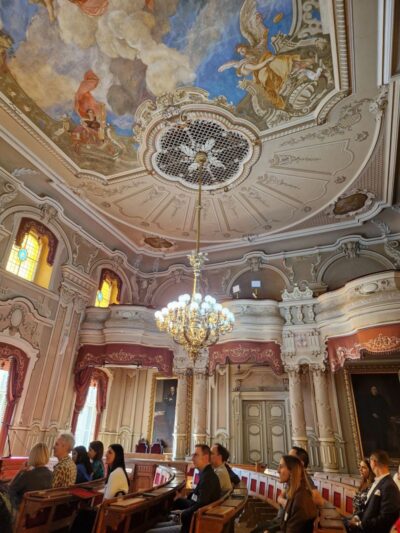
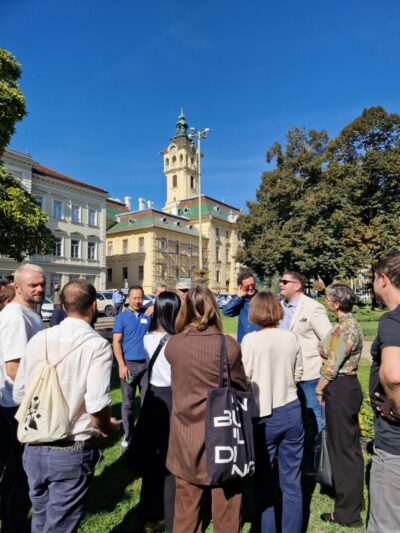
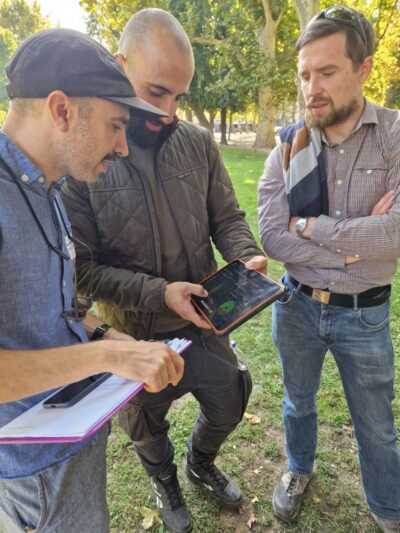
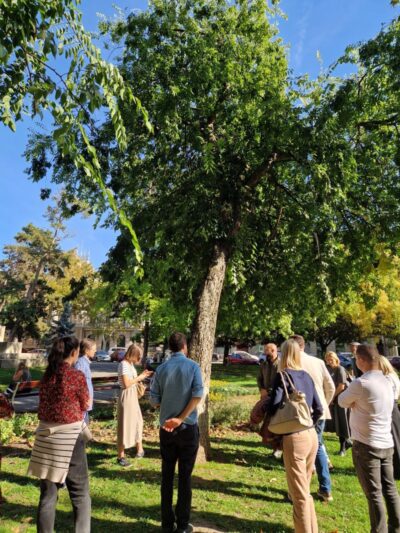
The beautiful historic university city of Szeged provided an inspiring setting for these discussions. Beyond the impressive City Hall, participants explored urban green infrastructure and experimented with digital tools in the city itself. Activities included digital mapping to support the watering of young trees and AI-assisted technologies to assess the condition of urban trees. These practical examples demonstrated how innovation can support municipal professionals, strengthen local knowledge and create opportunities for citizen participation.
A city is a state of mind
As urban sociologist Robert E. Park famously observed, “A city is a state of mind.”
This idea provided a recurring theme throughout the keynote and the discussions in Szeged. Cities are much more than buildings, infrastructure and data. They are shaped by people, relationships, traditions, cultures and a shared sense of belonging.
Digital technologies can help us understand urban challenges and develop better solutions. But they cannot replace a shared vision, mutual trust or the willingness to shape change together. Sustainable urban transformation is therefore not simply a technological challenge. It is a collaborative process that connects research, policy, practice and people.
We thank the Driving Urban Transitions Partnership and our welcoming hosts in Szeged for two inspiring days of exchange, experimentation and European city-to-city learning.
Learn more about the Driving Urban Transitions Partnership
Topics: Urban Transformation · Science Engagement · Co-Creation · Climate Adaptation · Regional Innovation Ecosystems · European Collaboration