Future-oriented urban and regional development increasingly emerges at the intersection of science, public administration, business, and civil society. Cities and regions are currently facing profound transformation processes that require new forms of collaboration and shared learning. These include, among others:
- Ecological transformation (climate, energy, land use development)
- Social transformation (demographics, integration, housing)
- Economic transformation (deindustrialization and structural change)
- Digital transformation (smart city, artificial intelligence)
- Spatial transformation (mobility, neighborhood development)
- Governance & cooperation (participation, institutional integration)
All of these challenges require integrated solutions that go beyond institutional boundaries and established policy fields. Developing viable and knowledge-based solutions for complex challenges calls for new forms of collaboration, clear role definitions, and targeted competencies for cooperative development processes.
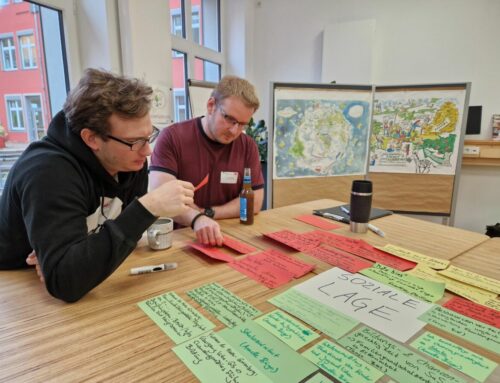
With this practice-oriented workshop, we support regional associations, districts, municipalities, economic development agencies, as well as interface actors from universities, science management, and urban and regional administrations in:
- addressing transformation processes collaboratively
- applying co-creative methods
- developing a better understanding of potential partners, their processes, and their ways of thinking
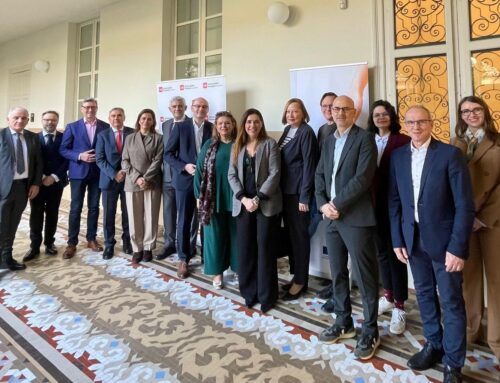
The workshop is designed for actors working at institutional or sectoral interfaces in cities and regions who moderate, initiate, or strategically support development processes.
At the core of the workshop are key competencies for cooperative urban and regional development at the interface of science, administration, business, and society.
Possible workshop topics include:
- Understanding transformation dynamics
- Planning knowledge production and knowledge transfer together with partners
- Co-creation methods such as Design Thinking and scenario planning
- Stakeholder engagement: identifying, structuring, inviting, and moderating stakeholders
- Governance structures and roles in transformation processes
These topics are not addressed abstractly. Instead, they are translated into concrete approaches for action through collaborative work. A key focus is the ability to connect different institutional logics productively and actively steer complex transformation processes in a cooperative way.
Location: The workshop can be conducted on-site or online
Duration: 4–6 hours (by arrangement)
Costs: Individual offer upon request