Successful collaboration between cities and academia requires stable partnerships—but do these always have to rely on large-scale projects and complex consortia? In 2025, the City of Würzburg and the University of Würzburg demonstrated through a new initiative that collaboration can also be smaller, more focused, and therefore more sustainable.
As part of the TSUWue – Transformation Lab for the City and the University of Würzburg, city2science, represented by Dr. Annika Kreikenbohm, supported the development and dialogue processes between the municipal administration and the university as an external facilitator and advisor. The goal throughout 2025 was to enable a well-founded, methodologically supported collaboration in which diverse perspectives become visible, accessible, and productively usable.
Background of the Tandem Project
The project TSUWue – Transformation Lab for the City and the University of Würzburg was carried out as part of the funding line “Transformation Lab for Higher Education Institutions” by the Stifterverband. Its aim is to strengthen long-term collaboration between academia and municipal administration and to pilot new forms of knowledge transfer based on mutual respect and partnership.
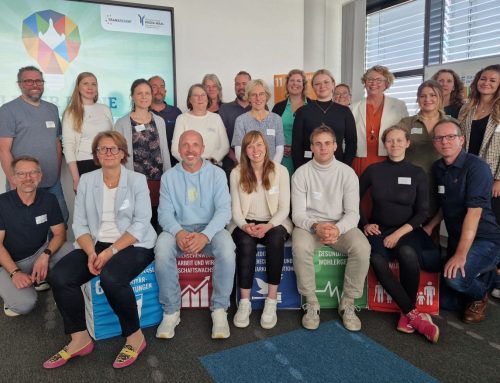
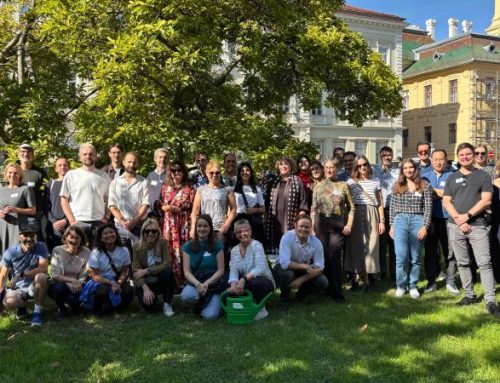
At the heart of the project were four tandems, each consisting of one representative from the City of Würzburg’s administration and one from the University of Würzburg. Over several months, these teams worked on concrete, practice-oriented challenges in urban development—such as the use of public spaces or the promotion of urban biodiversity.
Strategic project leadership was provided by Prof. Dr. Anja Schlömerkemper (WueLAB, University of Würzburg) and Martin Heilig (Mayor of the City of Würzburg). Operational implementation was led by Dr. Nicola Oswald (WueLAB) and Christian Weiß (City of Würzburg).
Facilitation, Methods, and Impact
city2science was responsible for the conceptual design, facilitation, and process support of the tandem and group workshops. This included developing a workshop design tailored to transdisciplinary collaboration and implementing suitable methods for jointly addressing real urban challenges. Through facilitated collaboration, municipal staff and university researchers were able to learn about each other’s language, logic, and needs—and to reflect on them in a protected space.
A key focus of the facilitation was the use of effective co-creation methods: from developing How Might We questions to creative ideation and prioritization formats, as well as prototyping approaches and impact clarification. city2science provided working materials and reflection tools and supported the groups in continuing their processes independently.
External facilitation made a significant contribution to creating structure, clarity, and trust within the dialogue. It relieved participants methodologically and organizationally, allowing the tandems to focus on shared understanding, learning, and problem-solving. Beyond developing concrete solution ideas, the exchange also generated transdisciplinary impulses and measures with impact beyond the project itself—strengthening long-term collaboration between science, administration, and society.
With this facilitation, city2science delivered a practical example of how participatory and transdisciplinary processes can be professionally moderated, methodologically supported, and outcome-oriented—thus contributing to sustainable, knowledge-based urban development.